There is a kind of knowing that lives in the body before it is ever named by the mind.
It is the feeling of stepping onto land that carries the memory of thousands of years of human prayer, ceremony, and relationship, and sensing, somewhere deep in the bones, that something is being called home. That the earth beneath one’s feet holds a memory, even if the conscious mind has never been there before.
This is what pilgrimage offers. Not a vacation. Not a retreat in the conventional sense. Something older. Something essential.
Understanding Pilgrimage
The word pilgrimage comes from the Latin peregrinus, a traveler, a wanderer, one who journeys to a sacred place. Yet within this worldview, pilgrimage is not defined by arrival. It is defined by the walking.
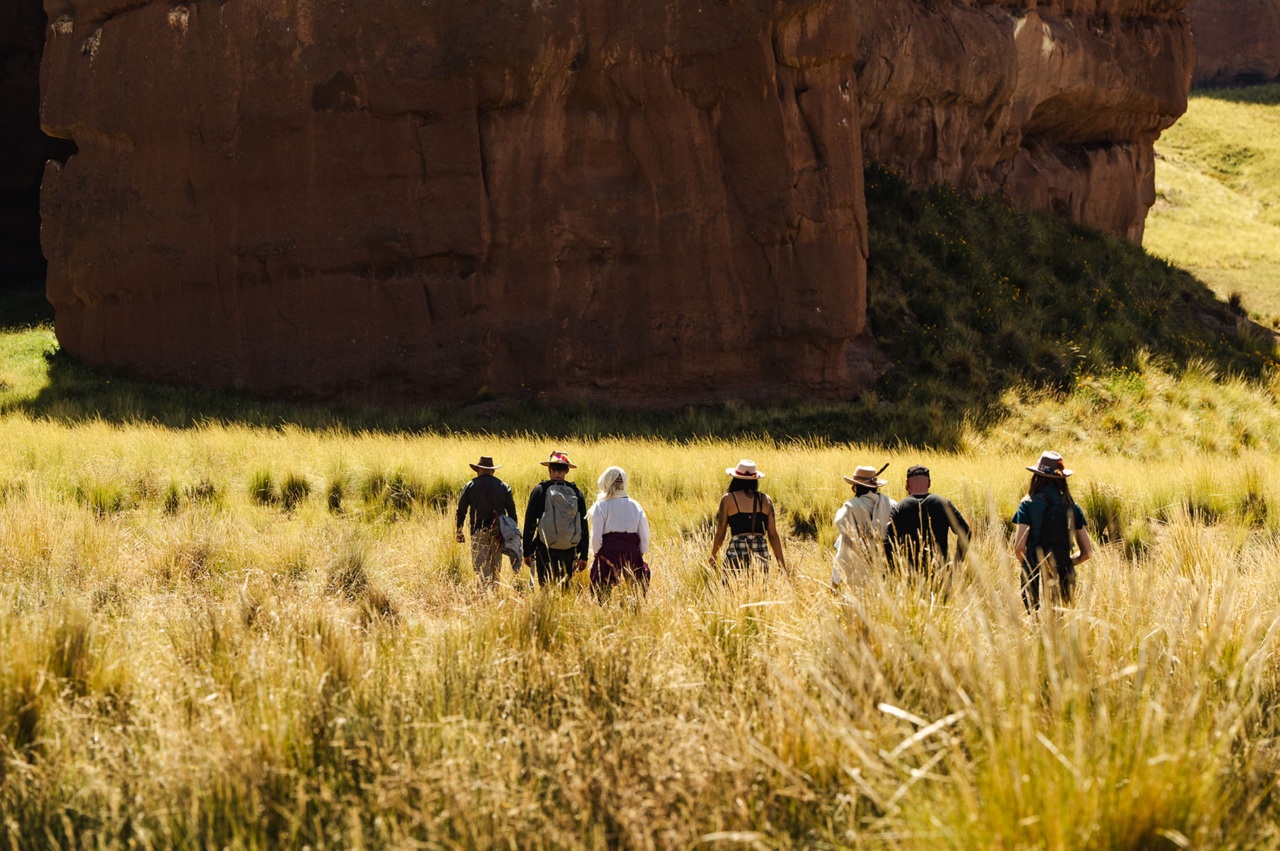
When a person leaves behind the familiar rhythms of daily life and enters a landscape that carries the memory of the Ancestors, whether their own or those of a wisdom tradition they feel called toward, something begins to shift. The noise of ordinary life quiets. The body starts to listen differently. The land begins to speak in a more intimate way.
In the Andes, the mountains are understood as Apus, living spiritual beings, guardians of the land and the people who have walked it for millennia. The waters are Mama Cocha, the great mother, source of life and renewal. The earth itself is Pachamama, not a metaphor, but a living presence that invites relationship and reciprocity.
To walk on this land is to enter into relationship with it. And that relationship, over time, changes a person.
The Wisdom Held in the Land
Certain ceremonial landscapes carry something that cannot be replicated.
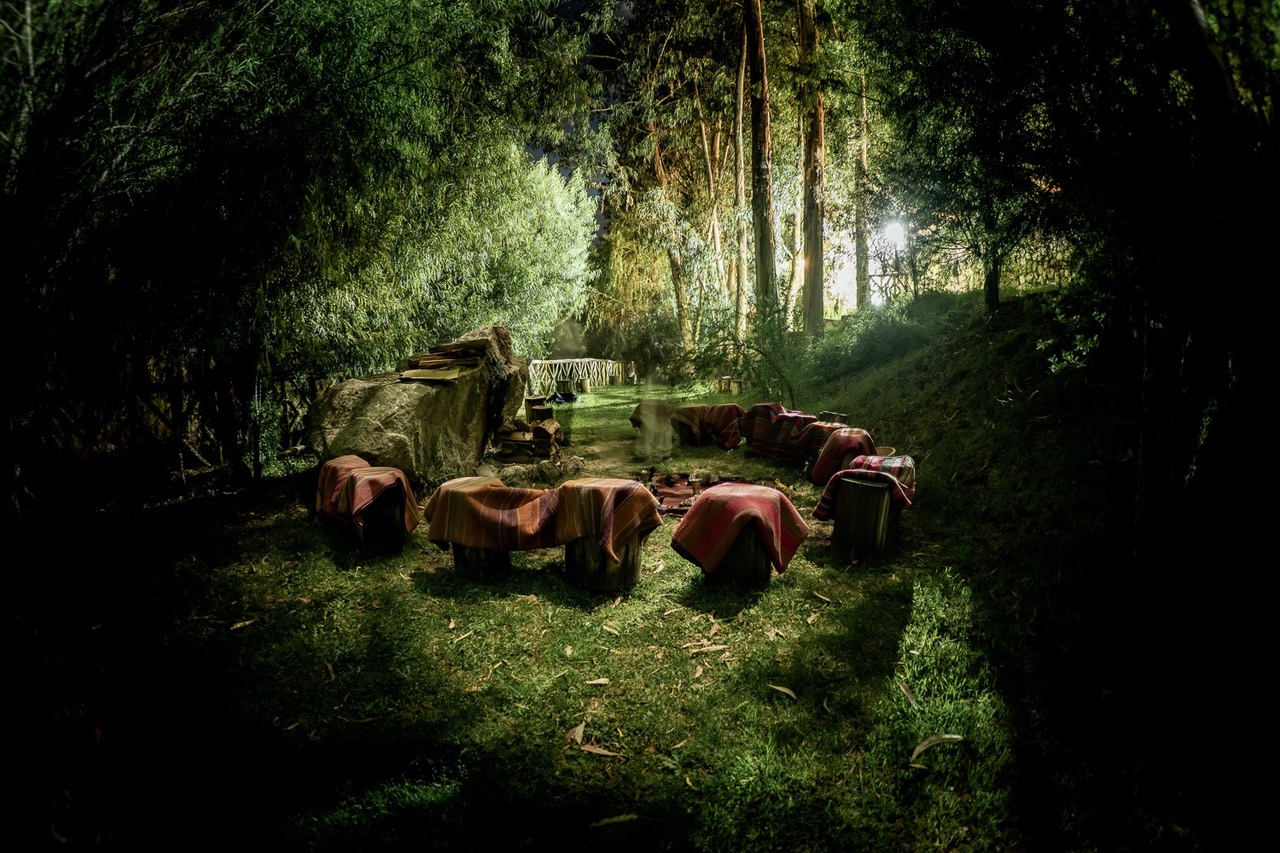
The sacred sites of the Andes, its temples, mountains, and rivers, hold the accumulated memory of thousands of years of human seeking. Generations of wisdom keepers have walked these paths, sat in ceremony on this land, and tended the living traditions passed down through them.
When someone arrives in these places with reverence and openness, something in the body begins to remember what the mind cannot locate. Not as information, but as recognition. Through sensation. Through presence. Through a kind of embodied knowing that predates personal story.
Within the Andean Worldview, this is often referred to as Yachay (Sacred Learning), wisdom that lives in the body, in the land, and within lineage. It is not something that can be acquired or abstracted. It asks to be experienced directly. It asks to be walked into.
There is a simple understanding here that modern life often moves past too quickly. The land is not separate from us. It is something we are inseparable from. And when we return to it with presence and attention, something in us returns as well.
Lineage as a Living Transmission
Lineage, in this way of understanding, is not a fixed record of the past. It is a living transmission.
It moves through people, through ceremony, through the land itself. It is carried in the body, in practice, and in the subtle ways we learn to listen and relate to the world.
Knowledge, in this context, is not only information. It is relationship. It is lived experience. It is the continuation of human beings who have walked similar paths, asked enduring questions, and found their way into shared ground of understanding.
To connect with a living lineage, to sit with a teacher who carries it, and to walk the land where it has been tended, is to receive something that cannot be fully translated into words. It is to enter a story that is already in motion, and larger than one’s individual life.
This is part of why pilgrimage matters. Not as tourism or consumption of place, but as encounter with something living. A meeting that shifts a person not through instruction, but through participation.
Why Time and Space Matter
We live in an age shaped by speed. Productivity is prioritized. Time is measured. Worth is often tied to output.
Within this framework, stepping away from daily life to walk slowly through ancient landscapes, to sit in ceremony, and to listen deeply can appear unnecessary, or even indulgent.
Yet there is another way of understanding this movement.
Reciprocity, or Ayni, is a foundational principle in Andean cosmology. It points to a simple but often overlooked truth. We cannot give what we do not have. When we tend to our own roots, when we create space to return to what is essential, we become more capable of being in right relationship with life around us.
Pilgrimage is not an escape from life. It is a return to its depth.
When someone allows themselves the time and space to walk on sacred land, to be held within a living lineage, and to slow down enough to listen in a different way, they return carrying something tangible. Clarity. Groundedness. A quieter, more spacious sense of belonging.
This is the gift pilgrimage offers. And it remains available to anyone willing to walk.
The path is made by walking
There is no shortcut to this kind of knowing.
It must be lived. It must be walked.
For thousands of years, seekers have traveled the ancient paths of the Andes, guided by the understanding that some forms of wisdom can only be discovered by stepping beyond the familiar. By trusting the land as teacher. By allowing life itself to become the guide.
That invitation is still present.
The land continues to speak. The lineage continues to live.
The path is made by walking.
And it begins with a single step.
ABOUT Jhaimy Alvarez-Acousta
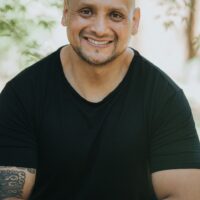
Jhaimy Alvarez-Acosta is a Traditional Curandero, born and raised in the Andes, who has walked the path of a Wisdomkeeper for over 35 years. Trained by his Elders and Masters, he carries deep reverence for the teachings of his Ancestors and a lifelong commitment to sharing this sacred knowledge with integrity. Find out more about how you can join his community or attend one of his upcoming events to deepen your connection to Mother Earth, and live in right-relationship with all of life.